


Neonicotinoids, “neonics” for short, are a class of insecticides linked to bee die-offs. These pesticides disrupt the nervous system of bees and other insects and can cause paralysis and death. Research also shows that neonics can harm the development of baby bee brains.
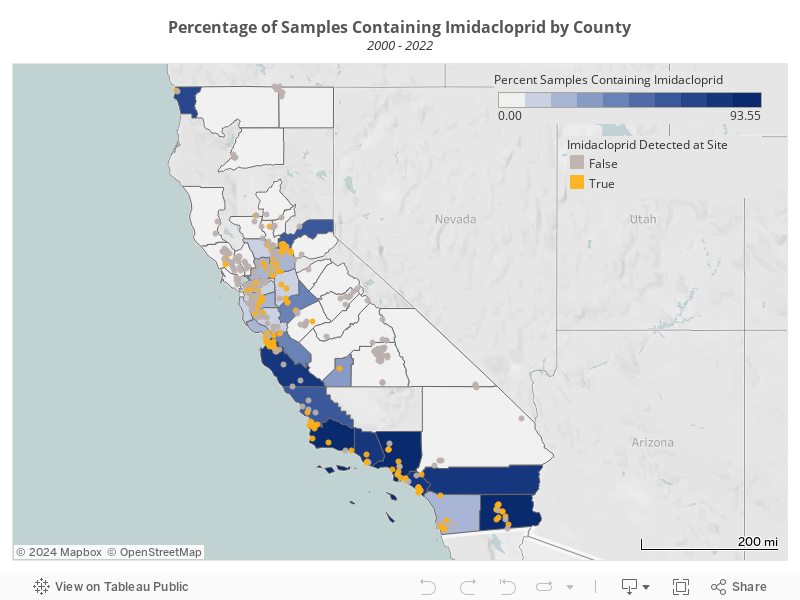
In 1991, imidacloprid became the first neonicotinoid registered for use. In this map, we look at water contamination from imidacloprid.
According to the California Department of Pesticide Regulation (DPR), there are 253 pesticide products registered for use in California that contain imidacloprid. This insecticide can remain in the soil for long periods of time and be transported by rain or irrigation systems, which leads to contamination in California’s water.
Water sampling conducted by DPR found that 92% of urban water samples in Los Angeles, Orange, and San Diego County and 58% in urban areas of Alameda, Contra Costa, Placer, Sacramento, and Santa Clara County contained imidacloprid at levels above EPA’s chronic benchmark for harm to aquatic ecosystems.
Explore the map and graph below to see your community’s imidacloprid contamination levels in waterways. And take action to address urban use of neonics, by calling on Gov. Newsom to sign AB 2146 by the end of September.
Read our press release here.

Shop Our Store
Make your garden a welcoming habitat for your neighborhood bees with this lovely, all-zones appropriate bee-friendly garden kit. A great way to let everyone know that you avoid pesticides and grow flowering plants to support our hard-working pollinators!


